


Blog
Pickleball Injuries: Getting Back on the Court Faster with SoftWave Therapy at Thrive Chiropractic
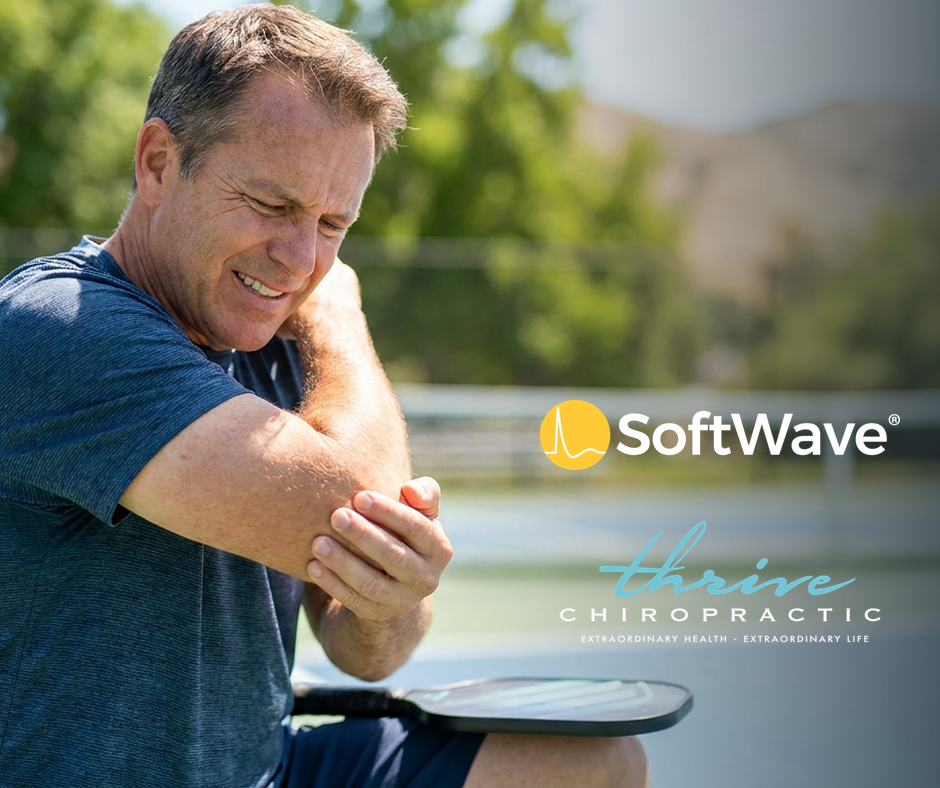
Pickleball has taken the Conejo Valley by storm. From the public courts in Westlake Village and Thousand Oaks to private clubs in Agoura Hills and Calabasas, players of every age are picking up a paddle several times a week. All that fun comes with a cost: quick lateral shuffles, repetitive overhead smashes and sudden stops put real stress on the elbow, shoulder, knee and Achilles tendon. At Thrive Chiropractic in Westlake Village, California, Dr. Laura Willis and Dr. Mike Willis help pickleball players recover faster and stay on the court with SoftWave Tissue Regeneration Technology, a non-surgical, drug-free treatment that uses electrohydraulic supersonic acoustic waves to calm inflammation and stimulate the body's own healing response.
Why Pickleball Injuries Are on the Rise
Pickleball is easy to learn, social and low-impact compared to tennis, which is exactly why so many people jump in with little preparation. Many players are returning to sport after years away, and tendons that haven't been loaded in a long time are suddenly asked to handle hundreds of short, explosive movements in a single session. Add hard outdoor court surfaces, back-to-back games and long tournament weekends, and overuse injuries become very common. Sports medicine reports have documented a sharp increase in pickleball-related injuries over the past several years, especially among adults over 50.
The Most Common Pickleball Injuries We See
- Pickleball Elbow (Lateral Epicondylitis): Pain on the outside of the elbow from repetitive backhands and gripping the paddle too tightly. It is the same condition as tennis elbow and is one of the most frequent complaints we treat.
- Golfer's Elbow (Medial Epicondylitis): Pain on the inside of the elbow, often from forehand dinks and wrist-heavy shots.
- Rotator Cuff Tendinopathy: Shoulder pain from overhead smashes and serves, often worse at night or when reaching behind the back.
- Knee Pain and Meniscus Irritation: Quick pivots and lunges at the kitchen line can aggravate arthritic knees, the patellar tendon and the meniscus.
- Achilles Tendinitis and Calf Strains: Explosive first steps and backpedaling for lobs load the Achilles tendon heavily, and calf strains are common in players over 40.
- Plantar Fasciitis: Hard courts and frequent play can trigger stabbing heel pain, especially with the first steps in the morning.
- Low Back Strain: Bending low for dinks and twisting for shots can overload the lumbar spine.
How SoftWave Therapy Helps Pickleball Players Heal
Most pickleball injuries are tendon and soft-tissue problems. Tendons have a limited blood supply, which is why elbow and Achilles pain can linger for months even with rest, ice and braces. SoftWave Therapy, an advanced shock wave technology, is designed to address the underlying tissue rather than simply masking pain:
- Decreases Inflammation: SoftWave helps modulate the inflammatory response so irritated tendons can calm down, often with noticeable relief after the first few sessions.
- Improves Blood Flow: The acoustic waves stimulate eNOS (endothelial nitric oxide synthase) and VEGF (vascular endothelial growth factor), which promote angiogenesis, the formation of new blood vessels, bringing oxygen and nutrients to poorly supplied tendons.
- Activates Stem Cells: SoftWave stimulates, activates and mobilizes the body's own stem cells to support tissue repair and regeneration.
- Breaks the Pain Cycle: Treatment helps reduce pain signaling, making it easier to keep moving and complete strengthening exercises.
- No Needles, No Downtime: Sessions are quick, there are no injections or medications, and most players go about their day immediately afterward.
SoftWave vs. Rest, Braces and Cortisone Shots
Many players are told to stop playing for six to twelve weeks, wear a counterforce strap or try a cortisone injection. Rest helps, but tendon pain often returns as soon as play resumes because the damaged tissue never fully healed. Cortisone may calm pain temporarily, but repeated steroid injections have been associated with weakening of tendon tissue over time. SoftWave Therapy takes the opposite approach by stimulating the body to repair the tendon itself, so you can return to the court with healthier tissue rather than a temporarily numbed injury.
Sore Elbow or Achilles From Pickleball? Request Your SoftWave Consultation Here!
What to Expect at Thrive Chiropractic
Your visit begins with a thorough consultation and examination with Dr. Laura or Dr. Mike Willis. We look at where the pain is coming from, how you move, your playing schedule and your goals. If you are a good candidate, SoftWave treatment is delivered directly to the injured area. Each session takes only a few minutes per area, and most care programs involve a series of sessions spaced about a week apart. Because Thrive Chiropractic takes a whole-body approach, your care may also include chiropractic adjustments, mobility work and guidance on paddle grip, warm-up and recovery so the injury doesn't return.
Tips to Prevent Pickleball Injuries
- Warm Up First: Spend five to ten minutes on light movement, arm circles, calf raises and side shuffles before your first game.
- Check Your Grip: A paddle grip that is too small or held too tightly increases strain on the forearm tendons.
- Wear Court Shoes: Running shoes are made for forward motion. Court shoes support lateral movement and protect the ankles and Achilles.
- Build Up Gradually: Increase playing time slowly, especially if you are new to the game or returning after a break.
- Strengthen Between Games: Forearm, shoulder, calf and hip strengthening makes tendons more resilient.
- Don't Play Through Sharp Pain: Early treatment is easier and faster than treating an injury that has become chronic.
Frequently Asked Questions About SoftWave for Pickleball Injuries
Can I keep playing pickleball during SoftWave treatment?
Many patients are able to continue playing with some modifications. Dr. Laura and Dr. Mike will give you specific guidance based on your injury and how your body is responding.
How soon will I feel a difference?
Many patients notice reduced pain within the first few sessions, while tissue healing continues to build over the following weeks.
Does SoftWave hurt?
Most patients describe the treatment as a tapping sensation. It may feel tender over the injured area, and the intensity can be adjusted for comfort.
Is SoftWave only for elbow pain?
No. SoftWave can be used on the shoulder, knee, Achilles, foot, hip and back, which covers nearly every common pickleball injury.
Take Action: Get Back to the Kitchen Line
Don't let elbow, shoulder, knee or Achilles pain take you out of the game you love. Whether you play at Westlake Village, Thousand Oaks, Agoura Hills, Oak Park, Newbury Park or Calabasas courts, Dr. Laura and Dr. Mike Willis can help you heal and play stronger with SoftWave Therapy.
Contact Thrive Chiropractic Today
- Address: 910 Hampshire Rd Suite U, Westlake Village, CA 91361
- Phone: (805) 908-0111
Dr. Laura and Dr. Mike are committed to providing personalized care that keeps you active and doing what you love. Schedule your consultation today and discover how SoftWave Therapy can help you recover from pickleball injuries and get back on the court with confidence!
Pickleball Pain? Schedule SoftWave Therapy Online Here!
‹ Back

 910 Hampshire Rd., Suite U

